
The Circular Economy: Closing the Recycling Loop
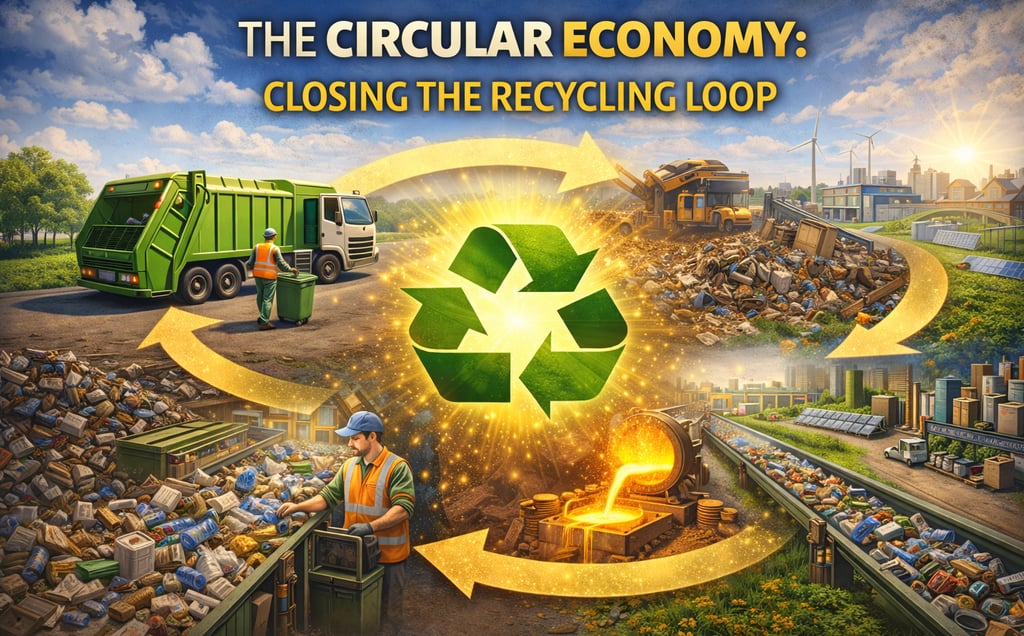
In today's world, where environmental sustainability is of paramount importance, the concept of a circular economy has gained significant attention. A circular economy aims to minimize waste, maximize resource utilization, and create a closed-loop system that promotes long-term sustainability. In this blog post, we will explore the concept of a circular economy and highlight how our company plays a vital role in closing the recycling loop.
Understanding the Circular Economy
The circular economy is a regenerative system that aims to keep resources in use for as long as possible. It involves the continuous reuse, refurbishment, and recycling of materials to create a closed-loop system. Unlike the traditional linear economy, which follows a "take-make-dispose" model, the circular economy focuses on reducing waste and ensuring that materials are reintegrated into the production cycle.
By embracing the principles of the circular economy, we can shift from a linear, wasteful system to one that is sustainable and environmentally friendly. This transition requires a collaborative effort from all stakeholders, including businesses, governments, and consumers.
Closing the Recycling Loop
Our company recognizes the importance of closing the recycling loop and actively participates in this process. We play a vital role in ensuring that recycled materials are reintegrated into the production cycle, thereby reducing the demand for virgin resources and minimizing waste.
Through our recycling initiatives, we collect and process various materials, such as plastics, paper, and metals. These materials undergo a thorough sorting and cleaning process to remove impurities and contaminants. Once the materials are ready, they are transformed into raw materials that can be used in the manufacturing of new products.
By incorporating recycled materials into our production processes, we not only reduce the environmental impact of our operations but also contribute to the creation of a sustainable and closed-loop system. This approach helps conserve natural resources, reduce energy consumption, and minimize greenhouse gas emissions.
The Benefits of a Circular Economy
The adoption of a circular economy brings numerous benefits to both businesses and the environment. By closing the recycling loop, we can:
Reduce waste and landfill usage
Conserve natural resources
Minimize energy consumption
Decrease greenhouse gas emissions
Create new job opportunities in the recycling and manufacturing sectors
Stimulate innovation and promote the development of sustainable technologies
Furthermore, a circular economy fosters a sense of responsibility and accountability among businesses and consumers. It encourages us to rethink our consumption patterns, prioritize recycling and waste reduction, and embrace sustainable practices.
Conclusion
The concept of a circular economy offers a promising solution to the environmental challenges we face today. By closing the recycling loop and embracing sustainable practices, we can create a more resource-efficient and environmentally friendly future. Our company is proud to play a vital role in this process, contributing to the creation of a sustainable and closed-loop system. Together, we can make a significant impact in building a better world for future generations.